
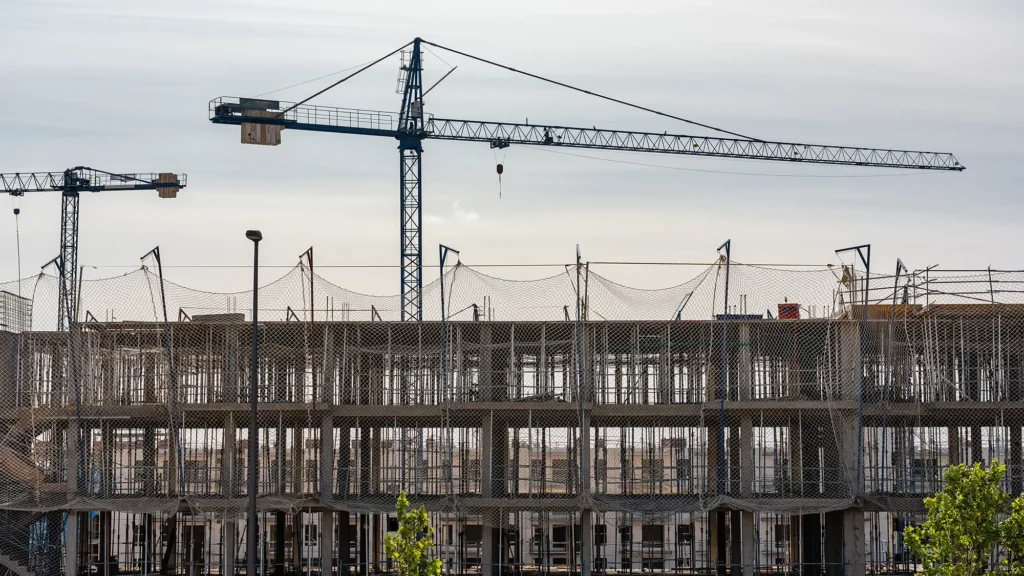

When 50 industrial building purchasers sought to hold project architects liable for financial losses from delayed delivery, Azhar & Goh’s defence secured a Federal Court decision that defined the scope of professional duty and protected architects from indeterminate liability.
The Case
Fifty purchasers bought units in a special industrial building project in Seberang Perai Tengah, Pulau Pinang; a facility designed for industries producing environmentally hazardous substances. In 1995, they signed Sale and Purchase Agreements with the developer, with a crucial term: vacant possession would be delivered within 24 months from building plan approval.
Eight years later, the industrial units remained incomplete or unoccupied.
The purchasers’ frustration was understandable. Their Sale and Purchase Agreements entitled them to liquidated damages at 10% per annum if the developer failed to deliver on time. But the developer had been wound up in 2002, leaving the purchasers without recourse against their contractual counterparty.
They turned their attention to the project architect and project manager, filing negligence claims for pure economic loss, or simply, financial losses not linked to any physical damage or structural defects. Their claims included loss of progress payments, costs of alternative buildings and loss of rental income.
The purchasers alleged that the architects had acted negligently in three critical ways: preparing an original layout plan that required amendment, supervising the works improperly and certifying completed works prematurely. These actions, they argued, caused an eight-year delay in obtaining Certificates of Fitness for Occupation (CFO).
The case centred on two major delays. First, the original layout plan approved by the local council on 20 December 1994 assumed neighbouring landowners would consent to slope cutting on their properties. When one landowner refused consent, the plan had to be amended, which was a drawn-out process that took until 5 August 1999. Second, the local council’s approval was conditional upon compliance with the Department of Environment’s requirements, mandating construction of a Central Effluent Industrial Treatment System (CEITS) for toxic waste treatment.
The architects refused to apply for Certificates of Fitness for Occupation until this waste treatment system functioned according to the requirements of the Department of Environment. The purchasers claimed this refusal contributed to the delay.
The High Court found the architects 50% liable, holding they had “negligently prepared the original layout plan on an assumption of fact that proved to be false” and certified completion of works even before obtaining the Department of Environment’s approval. The trial judge concluded the architects “owed a duty of care to the appellants for proper inspection and/or supervision or omission of the work at the site”.
The Court of Appeal reversed this decision, largely on grounds of public policy. The appellate court ruled that the architects were merely agents of the developer, and since the Sale and Purchase Agreements specifically addressed certificate of fitness obligations, “it would not be fair to impose on the defendants a duty of care to the purchasers with regard to the obtaining of the CFOs”.
The purchasers appealed to the Federal Court, raising fundamental questions about architect liability to third-party purchasers and whether pure economic loss was recoverable in Malaysian negligence law.

Our Strategy
Our defence team, led by Kenny Chan Kean Li and comprising Edwin Seibel, Lim Poh Leong, Yap Kok Kheong and Ong Bee Khoon, represented the architects before the Federal Court. Our strategy centred on demonstrating that the alleged negligent acts fell outside the architects’ professional scope of duty and that the purchasers failed to establish the necessary elements for negligence liability.
Architects’ Liability Must Fall Within Professional Scope
We established that whilst “an architect rendering his professional service in a construction project can be made liable for negligence if the damage and injury suffered by the purchasers was caused by his act or omission within the scope of duty of care of the architect”, the critical question was whether the matters complained of fell within that scope.
The construction of the Central Effluent Industrial Treatment System (CEITS) was explicitly not the architects’ responsibility. Clause 14.02 and the sixth schedule of the Sale and Purchase Agreements “specifically imposed on the developer a duty to build the CEITS for treatment of hazardous and toxic waste according to specifications required by the DOE”. The system was designed by a specialist licensed by the DOE and subsequently constructed by the developer.
We argued that the respondents need not assume responsibility for the delay involved in obtaining the approval for CFO when the CEITS was not functioning in accordance with the requirements set out by the DOE, since this was not within the scope of the respondents’ professional work. Indeed, the architects’ refusal to apply for certificates was “merely in the discharge of their duty of care” to ensure the special industrial project met mandatory environmental standards.
Foreseeability Requirement Not Satisfied
Our second strategic argument focussed on the threshold test of reasonable foreseeability. We demonstrated that as the architect for the project, the layout plan was prepared and submitted in accordance with the instructions received by the respondents from the developer.
The architects “were mainly responsible for the design and safety of the industrial buildings and compliance of the relevant laws”. The issue of obtaining neighbouring landowners’ consent, which triggered the delay, “was well within the scope of the developer’s duty”, not the architects’.
We emphasised that Section 2.01 of the Sale and Purchase Agreements explicitly provided that “reasonable amendments to the building plan may from time to time be made by the developer or the respondents with the approval of the appropriate authorities”. Plan amendments were contemplated and permissible.
Applying the standards of the reasonable man, we argued that the respondents could not have foreseen any liability for consequential financial loss to the appellants arising from their action in submitting the original layout plan and amending the same leading to the undue delay in completing the building.
Contractual Framework Precludes Tortious Liability
The decisive factor was our policy argument, which addressed the existence of comprehensive contractual remedies. The Sale and Purchase Agreements specifically imposed on the developer a duty under Clause 7.03 “to procure the issuance of Certificate of Fitness for Occupation (CFO) and to comply with all the requirements of the appropriate authorities”.
The agreements also provided liquidated damages for late delivery at 10% per annum. We argued that “there can be no action against the architect if the remedy asked for is specifically provided for in the contract. Otherwise, it has the effect of rewriting the contractual terms”.
The purchasers had entered into contractual relationships with the developer defining their rights and remedies. To allow them to circumvent these negotiated terms by suing the developer’s architects in tort would undermine contractual certainty. As we submitted, the architects were appointed by the developer, and they were the agents of the developer. They certainly owe a duty of care to the developer, their employer.
Policy Considerations Against Indeterminate Liability
Finally, we emphasised that it would also be against public policy to impose on architects a duty to deliver vacant possession of buildings within the developer’s contractual period. Such liability would only serve to compromise or even impede their professional duty in ensuring that the building laws are observed and that the structure of the building is safe.
Architects must be free to refuse issuing certificates when safety or regulatory requirements are not met, without fear of liability to purchasers for resulting delays.
The Verdict
On 2 July 2015, the Federal Court delivered its unanimous decision, dismissing the purchasers’ appeal with costs. In the judgment delivered by Zainun Ali FCJ (with Arifin Zakaria CJ, Richard Malanjum CJ, Suriyadi FCJ and Ahmad Maarop FCJ concurring), the Court adopted our arguments on scope of duty and policy considerations.
The Federal Court confirmed that “in the absence of any contract, an architect rendering his professional service in a construction project can be made liable for negligence if the damage and injury suffered by the purchasers was caused by his act or omission within the scope of duty of care of the architect”.
However, the Court held that “it cannot be disputed that the construction of the CEITS was not the responsibility of the respondents”. Since the waste treatment system was the developer’s contractual obligation, “the respondents need not assume responsibility for the delay involved in obtaining the approval for CFO when the CEITS was not functioning in accordance with the requirements set out by the DOE, as this was not within the scope of the respondents’ professional work”.
On the layout plan issue, the Court found the purchasers failed to establish reasonable foreseeability. The Court held that “the respondents were mainly responsible for the design and safety of the industrial buildings and compliance of the relevant laws”. The neighbouring landowner consent issue “was well within the scope of the developer’s duty”.
The Court concluded: “Applying the standards of the reasonable man, it is our view that the respondents could not have foreseen any liability for consequential financial loss to the appellants arising from their action in submitting the original layout plan and amending the same leading to the undue delay in completing the building and the issuance of the CFO. For this reason alone, the appellants’ claim against the respondents for pure economic loss on the grounds of late delivery of vacant possession of their building units must fail”.
On policy grounds, the Court emphasised that “there can be no action against the architect if the remedy asked for is specifically provided for in the contract. Otherwise, it would have the effect of rewriting the contractual terms. Thus, such claims should be dismissed on grounds of public policy”.
Significantly, the Court declared: “It would be against public policy to impose on architects a duty to deliver vacant possession of buildings within the developer’s contractual period. This would only serve to compromise or to impede their professional duty in ensuring that the building laws were observed and that the structure of the building was safe”.
The Federal Court set important precedent by holding that “claims for negligence should be brought within the scope of duty of care with the recoverability of claims for pure economic loss in negligence cases dependent on the facts of individual cases”. The Court emphasised that whilst architect liability to third parties is possible in appropriate circumstances, “it would not be fair, just and reasonable to impose on architects a duty of care for a responsibility which they had not assumed or one which is not within their professional scope of duty”.
This Federal Court decision protects architects’ professional independence and prevents indeterminate liability whilst preserving legitimate negligence claims for matters truly within architects’ professional scope. The judgment clarifies that the purchasers’ primary recourse for contractual performance issues remains with developers, not their professional consultants.
This case demonstrates Azhar & Goh’s expertise in complex professional negligence defence, securing precedent that continues to define the boundaries of architect liability throughout Malaysia’s construction industry.